Varan Bhat Loncha Kon Nay Koncha →
Have you seen this one yet? Let’s talk about that ending in the comments. 👇
: Stripped of moral guidance, the boys pivot from victims of their circumstances to cold-blooded executors of vengeance, triggering a dark cycle that marches toward an inevitable tragedy.
To a Marathi speaker, the title sounds like a playful, nonsensical question: "Who didn't take the pickled lentils and rice?" However, the title is actually written as "Nay Varan Bhat Loncha Kon Nay Koncha." The word refers to a simple, humble meal of lentil curry and rice, a staple in most Maharashtrian homes. Loncha means pickle, a common accompaniment. The phrase hints at the story's setting in the impoverished "chawls" (tenement housing) of Mumbai, where everyday life—like eating a meal of varan bhat —is a backdrop to a much darker reality of crime and survival. Varan Bhat Loncha Kon Nay Koncha
is a gritty, hyper-violent 2022 Indian Marathi-language crime drama directed by veteran filmmaker Mahesh Manjrekar. Based on a powerful short story by the acclaimed late writer Jayant Pawar , the film serves as a brutal coming-of-age chronicle set against the backdrop of Mumbai’s dark underworld and the socio-economic remnants of the city’s historical mill worker strikes.
When you are sad, Varan Bhat is a hug. When you are sick, Varan Bhat is medicine. When you are broke, Varan Bhat is a savior. When you are rich, Varan Bhat is a humbling reminder. Have you seen this one yet
The narrative then shifts back to four months earlier. Digya is a seemingly happy-go-lucky boy who lives with his grandmother, Baye, in a dilapidated chawl after his gangster father was killed in a gang war. Baye, who makes a living selling boiled eggs, fears that Digya will follow in his father's footsteps. The film follows his descent, as the influence of his surroundings and the lack of proper guidance push him and his friend towards a life of crime and violence to avenge his father's death.
: Digya is the son of a deceased, feared gangster. Despite his grandmother Bayo’s (Chhaya Kadam) efforts to keep him in school and away from his father’s path, Digya is consumed by a desire to avenge his father’s death and claim his place in the underworld. To a Marathi speaker, the title sounds like
Bhat refers to simple, fluffy, steamed rice. In Maharashtra, the preference leans toward Indrayani or Kolam rice—short-grain, fragrant, and slightly sticky, perfect for soaking up the Varan.
It asks us to pause and reconsider our relationship with food. We have been trained to think that expensive ingredients equal happiness. Yet, here is a meal that costs less than a dollar to make, contains no exotic spices, and has sustained an entire civilization for 2,000 years.

 Inkjet Printer / Fax / MFC / DCP
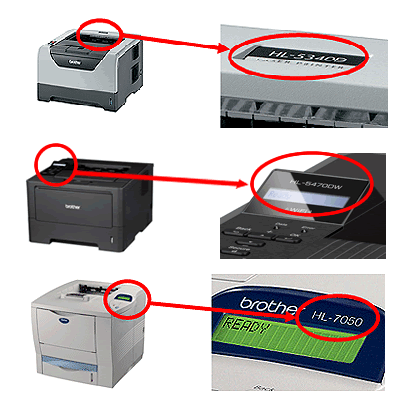
 Monochrome Laser Printer
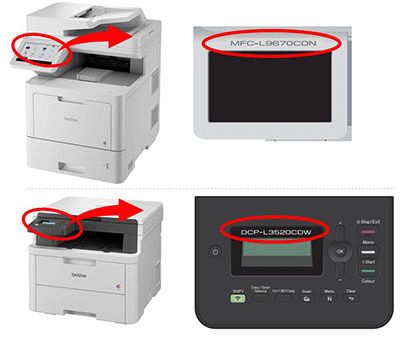
 Monochrome Laser Fax / MFC / DCP
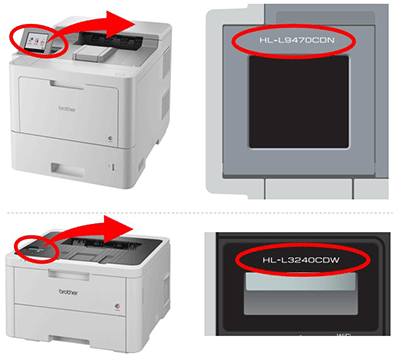
 Color Printer (Laser / LED)


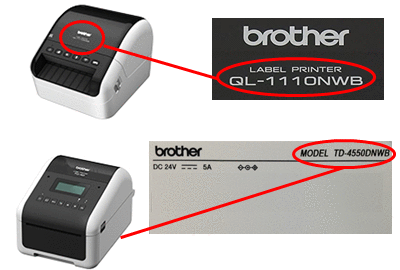
 Label Printer (QL/TD), Industrial Label Printer (TJ)
 Home Sewing Machine
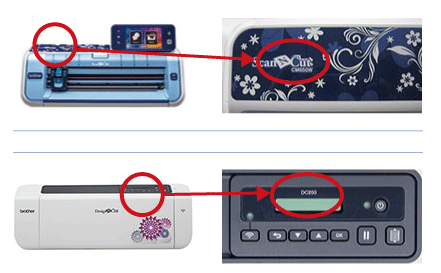
 Cutting Machine
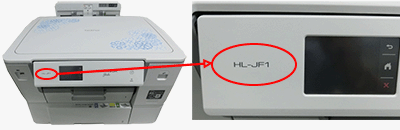
 Creative Printer (HL)