However, systemic exploitation is rarely fixed by legislation alone. As long as the industry relies on a hyper-competitive model that requires young people to surrender their autonomy for a chance at stardom, the underlying vulnerabilities will exist. True reform requires a cultural shift within the industry—one that views artists not as disposable corporate assets to be leveraged for institutional gain, but as human beings with fundamental rights to safety, dignity, and self-determination. To help you refine or use this article, please let me know:

: There have been efforts by the South Korean government to crack down on prostitution and related crimes, including within the entertainment industry. Public opinion is generally against prostitution, with many supporting stricter enforcement of laws and harsher penalties for those involved in exploiting others.

In the lexicon of the Korean entertainment industry, the term "sponsor" (스폰서) carries a specific, insidious meaning. A sponsor is typically a wealthy individual—a corporate executive, a politician, or a high-ranking media figure—who provides financial backing, career advancement, or lucrative casting opportunities to an entertainer in exchange for sexual favors.

The most prominent recent exposure was the Burning Sun scandal (2019), which involved a club in Gangnam frequented by K-pop stars, executives, and law enforcement officials. Investigations revealed chatrooms where male celebrities, including Seungri (of BIGBANG), discussed arranging sexual services for business investors. Although Seungri was initially convicted on charges including prostitution mediation, the scandal also unveiled a wider system: agencies allegedly used female trainees as “gifts” to secure foreign investment. Multiple women testified they were ordered to attend drinking parties and provide sexual favors. Though Seungri’s convictions were later overturned in part by a military court (he was conscripted during appeals), the scandal exposed a model where prostitution was “fixed” as an unspoken business transaction.

Scandals like Burning Sun have highlighted instances where law enforcement officials were bribed to look the other way or actively protect those involved in illegal activities.

With this debt hanging over their heads, refusal is rarely an option. When a sponsor requests a meeting or a "private greeting," the agency often acts as the pimp, forcing the artist to comply to secure funding for the company. This makes the prostitution "fixed"—it is not a random act of coercion but a structural component of business financing.

Whistleblowers have highlighted a "toxic" culture where sexual exploitation was frequently ignored or covered up by those in power, sometimes involving police collusion. Pivotal Cases and Legal Reckonings

South Korea’s entertainment industry—home to K-pop, K-dramas, and a global cultural phenomenon known as Hallyu (the Korean Wave)—generates billions of dollars annually. Behind the glittering performances and fan meet-and-greets, however, lies a persistent and deeply troubling accusation: that the industry has systematically “fixed” or institutionalized prostitution as a covert mechanism for securing investments, managing contracts, and controlling aspiring idols and actors. This article explores the structural evidence, legal context, and recent exposés that suggest the problem is not merely individual misconduct but an entrenched feature of a high-stakes, patriarchal entertainment ecosystem.

Establishing independent bodies to monitor the industry and provide a safe space for performers to report abuse without fear of retaliation.

As his eyes closed, a final notification: “Tomorrow’s schedule loaded. Variety show: ‘Idol Cooking Wars.’ Required emotion: competitive but gracious. Sleep well, Asset 407-Ion.”

For a country that prides itself on soft power and cultural excellence, confronting this dark fix is an urgent moral and economic necessity. Until agencies are dismantled through criminal liability, independent auditing, and trainee unionization, the Hallyu wave will continue to ride on the backs of the exploited—silenced, terrified, and trapped in a system rigged from the start.

Middlemen often facilitate these deals, acting as bridges between corporate elites and entertainment agencies.

The K-pop industry’s main production line is its trainee system, where hundreds of hopefuls, often minors, are molded into stars under contracts that routinely trade their rights for a slim chance at fame.




Download Links

South Korean Entertainment Model Prostitution S Fixed ❲4K • 480p❳

However, systemic exploitation is rarely fixed by legislation alone. As long as the industry relies on a hyper-competitive model that requires young people to surrender their autonomy for a chance at stardom, the underlying vulnerabilities will exist. True reform requires a cultural shift within the industry—one that views artists not as disposable corporate assets to be leveraged for institutional gain, but as human beings with fundamental rights to safety, dignity, and self-determination. To help you refine or use this article, please let me know:

: There have been efforts by the South Korean government to crack down on prostitution and related crimes, including within the entertainment industry. Public opinion is generally against prostitution, with many supporting stricter enforcement of laws and harsher penalties for those involved in exploiting others.

In the lexicon of the Korean entertainment industry, the term "sponsor" (스폰서) carries a specific, insidious meaning. A sponsor is typically a wealthy individual—a corporate executive, a politician, or a high-ranking media figure—who provides financial backing, career advancement, or lucrative casting opportunities to an entertainer in exchange for sexual favors.

The most prominent recent exposure was the Burning Sun scandal (2019), which involved a club in Gangnam frequented by K-pop stars, executives, and law enforcement officials. Investigations revealed chatrooms where male celebrities, including Seungri (of BIGBANG), discussed arranging sexual services for business investors. Although Seungri was initially convicted on charges including prostitution mediation, the scandal also unveiled a wider system: agencies allegedly used female trainees as “gifts” to secure foreign investment. Multiple women testified they were ordered to attend drinking parties and provide sexual favors. Though Seungri’s convictions were later overturned in part by a military court (he was conscripted during appeals), the scandal exposed a model where prostitution was “fixed” as an unspoken business transaction. south korean entertainment model prostitution s fixed

Scandals like Burning Sun have highlighted instances where law enforcement officials were bribed to look the other way or actively protect those involved in illegal activities.

With this debt hanging over their heads, refusal is rarely an option. When a sponsor requests a meeting or a "private greeting," the agency often acts as the pimp, forcing the artist to comply to secure funding for the company. This makes the prostitution "fixed"—it is not a random act of coercion but a structural component of business financing.

Whistleblowers have highlighted a "toxic" culture where sexual exploitation was frequently ignored or covered up by those in power, sometimes involving police collusion. Pivotal Cases and Legal Reckonings To help you refine or use this article,

South Korea’s entertainment industry—home to K-pop, K-dramas, and a global cultural phenomenon known as Hallyu (the Korean Wave)—generates billions of dollars annually. Behind the glittering performances and fan meet-and-greets, however, lies a persistent and deeply troubling accusation: that the industry has systematically “fixed” or institutionalized prostitution as a covert mechanism for securing investments, managing contracts, and controlling aspiring idols and actors. This article explores the structural evidence, legal context, and recent exposés that suggest the problem is not merely individual misconduct but an entrenched feature of a high-stakes, patriarchal entertainment ecosystem.

Establishing independent bodies to monitor the industry and provide a safe space for performers to report abuse without fear of retaliation.

As his eyes closed, a final notification: “Tomorrow’s schedule loaded. Variety show: ‘Idol Cooking Wars.’ Required emotion: competitive but gracious. Sleep well, Asset 407-Ion.” A sponsor is typically a wealthy individual—a corporate

For a country that prides itself on soft power and cultural excellence, confronting this dark fix is an urgent moral and economic necessity. Until agencies are dismantled through criminal liability, independent auditing, and trainee unionization, the Hallyu wave will continue to ride on the backs of the exploited—silenced, terrified, and trapped in a system rigged from the start.

Middlemen often facilitate these deals, acting as bridges between corporate elites and entertainment agencies.

The K-pop industry’s main production line is its trainee system, where hundreds of hopefuls, often minors, are molded into stars under contracts that routinely trade their rights for a slim chance at fame.
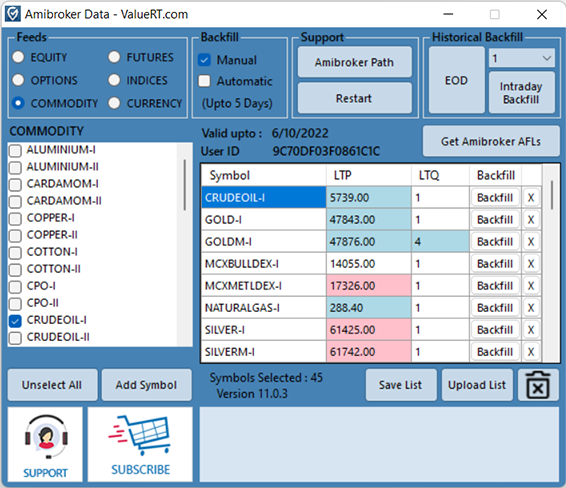
ValueRT Users' Reviews


"I found this valuert amibroker data feed Software very useful. Best of it is that it is very easy to use. I being a learner for technical analysis, ValueRT Data works very smoothly and now backfill speed also is very fast. Keep it up ValueRT Team."

Sudhir Narayana

"I have tried various data providers for amibroker, but found valuert data to be one of the best in India. Best part of valuert is their support. They have a very good team of technical assistants who are always eaver to resolve any issue to the users."

AV Saikumar

"I have been Valuert service since last 5 years i.e. since 2015. Since they valuert team have improved their service manifolds. Now valuert app has lot of useful features and very easy to use. Best part is that backfill is for 6 months in 1min timeframe."

Usha Damani


#1 Selling Amibroker Data Feed

High Speed Realtime Amibroker Data Feed for Commodity, Equity, Futures, Weekly/Monthly Options and Currency at Low Price. Accurate Data at Electrifying Speed with Highest Accuracy and Open Interest in Derivatives.

Amibroker-Data-Feed


<